The GLP-1 Diet: Eating Patterns, Natural Support, Berberine
There is no official GLP-1 diet in any medicine label, but there is a clear eating pattern that fits how these medicines change appetite and digestion. This page sets out that pattern, then looks honestly at natural GLP-1 support from food, and at berberine, the supplement nicknamed nature's Ozempic, including what that nickname leaves out.
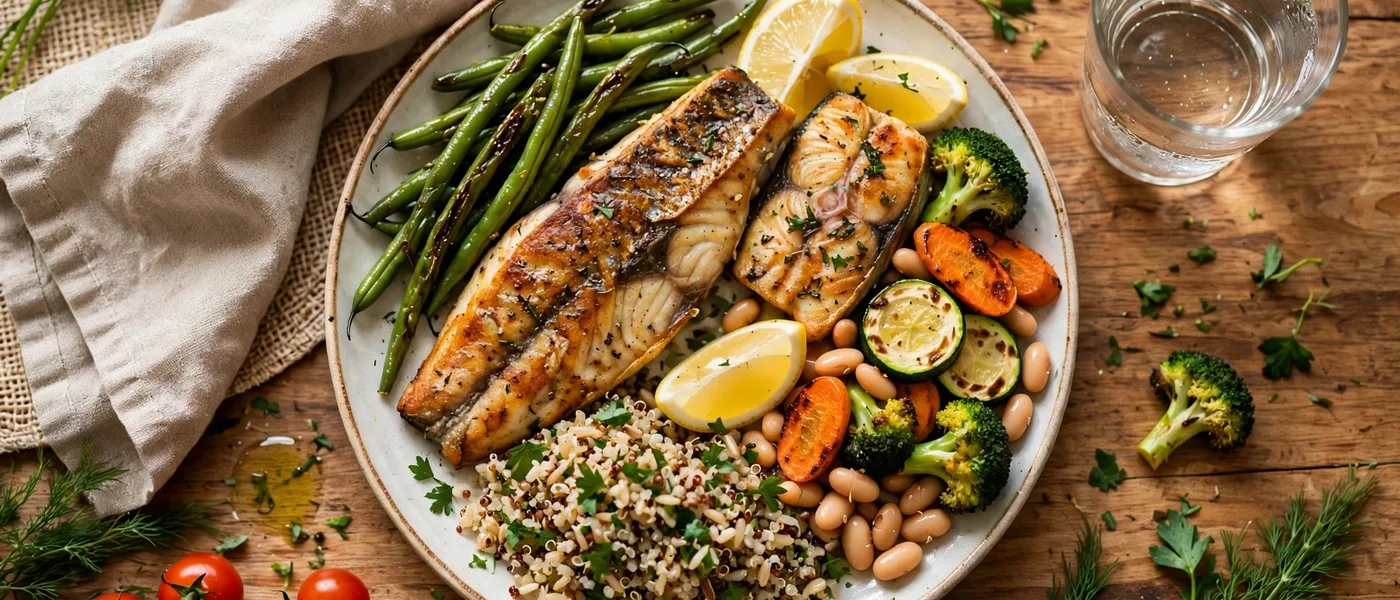
The pattern: protein first, fiber, smaller portions
The foundation is the pattern from the live eating guides on this site. Build meals around protein first, because total intake falls and muscle needs protecting, with a commonly cited target of 1.2 to 1.6 grams of protein per kilogram of body weight per day. Add fiber gradually toward about 14 grams per 1,000 calories, to support digestion that the medicine has slowed. Serve smaller portions, eat slowly, and stop at the first comfortable fullness, because fullness keeps building after the last bite when stomach emptying is slow.
Fluids run through the day, since reduced appetite often brings reduced thirst with it. Very greasy meals and sugary drinks commonly worsen nausea and work against treatment goals, which the GLP-1 foods to avoid guide details. The full foundation page is what to eat on GLP-1, with practical follow ons in the GLP-1 meal plan, GLP-1 grocery list, GLP-1 breakfast ideas and high protein meals for GLP-1 pages, plus the GLP-1 protein calculator for your own numbers.
A day that fits the pattern
In general terms, a day might open with eggs or Greek yogurt with fruit, continue with a modest lunch of chicken, fish, tofu or beans with vegetables and a small portion of grains, include a small protein forward snack only if hunger appears, and close with a smaller than usual dinner eaten slowly. Nothing on that list is exotic, and that is the point. The medicines change how much you eat and how eating feels far more than they change what a sensible plate contains.
Structure helps more than novelty. Preparing some components ahead, as the GLP-1 meal prep page describes, removes the daily decision load on low appetite days, and the eating out on GLP-1 guide covers menus and portions when someone else is cooking. People not taking any medicine can also eat this way, which leads directly to the next question: how much can food alone do through the body's own GLP-1 system?
Natural GLP-1: supporting the hormone you already make
Your gut releases its own GLP-1 after meals, and food choices influence that release. Meals containing protein, fiber and healthy fats stimulate the gut hormone system more than refined, low fiber meals, and fermented foods and a generally fiber rich pattern support the gut environment those hormones come from. Eating slowly, sleeping reasonably and moving after meals all belong to the same picture of a gut and appetite system working as designed. Describing this cautiously matters: food supports normal physiology, in the modest way food does anything.
What food cannot do is reproduce a medicine. The natural hormone is cleared within minutes, while the medicines are engineered to act all week, which is the entire reason they exist. Trial results such as an average loss of 14.9 percent of body weight at 68 weeks on semaglutide 2.4 mg in STEP 1 belong to the medicine, not to any eating pattern, and no diet has been shown to match them. A reader not on medication will still benefit from the pattern above for general health, but should expect ordinary, gradual nutrition effects, not drug effects from dinner.
Berberine vs Ozempic: the nickname, examined
Berberine is a plant compound sold as a supplement, and social media gave it the nickname nature's Ozempic. The nickname survives because berberine does have modest evidence for blood sugar support in small studies, and blood sugar is part of the Ozempic story. The comparison ends there. Berberine is not a GLP-1 medicine, does not act as one in any established way, has no large weight loss trials behind it, and has not been shown to produce anything like the appetite and weight effects of semaglutide. It is a supplement with a marketing nickname, not a natural version of a prescription drug.
Cautions are real and often skipped in the videos that promote it. Berberine can interact with prescription medicines, including medicines processed through the same liver pathways as many common drugs, and it commonly causes digestive side effects of its own. Supplement quality varies, since supplements are not held to the approval standard of medicines, and berberine is not a safe swap for prescribed diabetes treatment. Anyone considering it should raise it with their prescriber or pharmacist first, especially alongside diabetes medicines, where combined blood sugar effects need thought. It is not a substitute for Ozempic, for weight management treatment, or for medical care.
Putting the three layers together
Think of the topic in three layers that should never be blurred. The base layer is the eating pattern, which helps everyone on these medicines and supports general health off them. The middle layer is natural support, meaning food and habits that work with your own gut hormones in modest, normal ways. The top layer is the medicines themselves, prescription only, with trial measured effects and trial measured risks, covered on the GLP-1 drugs and how does GLP-1 work pages.
Supplements sit outside those layers as optional, gap filling tools, which is exactly how the GLP-1 supplements page treats them. Keeping the layers separate protects your money and your health: you will not pay drug prices for food claims, expect food results from a capsule nickname, or underestimate a real medicine because a supplement shares its headlines.
Common mistakes the pattern prevents
The first mistake is eating too little protein while eating less overall, which quietly trades muscle for scale weight and leaves people weaker at a lower weight. The second is fearing all carbohydrates and building an unsustainable diet around restriction, when the labels require nothing of the kind and steady, fiber carrying carbohydrates suit most people better. The third is drinking calories, since sugary drinks bypass the fullness the medicine creates while adding energy that works directly against treatment goals.
The fourth mistake is the mirror image: treating the medicine as permission to ignore food quality entirely because appetite is low. Small amounts of poor quality food still crowd out the protein, fiber and micronutrients a smaller diet must concentrate. The pattern on this page exists to prevent exactly these four errors with the least possible complexity, which is why it repeats across this site: protein first, fiber gradually, portions smaller, fluids steady, and marketing claims, whether for diets or for capsules with nicknames, kept in their proper place below the evidence.
Adapting the pattern to real life constraints
Real diets bend around work shifts, family meals, budgets and foods people simply will not eat, and the pattern bends without breaking because it is built on order and proportion rather than specific ingredients. Protein first can mean lentils as easily as salmon. Fiber can come from oats and beans at very low cost. Smaller portions work in a canteen, a family kitchen or a restaurant with the eating out guide's approach. What does not bend is the need to eat enough overall: appetite suppression that leads to barely eating is not success, and persistent inability to eat reasonable amounts is a reason to talk to the prescriber, not to celebrate the scale.
The bottom line on the GLP-1 diet
In one sentence: eat like someone whose appetite has become a smaller, slower version of itself, protein anchored, fiber carrying, gently portioned, and let medicines, supplements and nicknamed products each stay in their own honest category. That discipline, repeated daily, is the entire diet.
Frequently asked questions
Is there an official GLP-1 diet I have to follow?
No. The medicine labels do not prescribe a named diet. What exists is a practical pattern that fits how the medicines work: protein at every meal, fiber added gradually, smaller portions eaten slowly, fluids through the day, and care with very greasy food and sugary drinks that commonly worsen side effects.
Can food raise my own GLP-1 naturally?
Meals with protein, fiber and healthy fats stimulate the gut hormone system, including your own GLP-1, as part of normal digestion. The effect is modest and short lived compared with the medicines, which are built to act all week. Food supports normal physiology; it does not reproduce a drug.
Is berberine really nature's Ozempic?
No. That is a social media nickname. Berberine is a supplement with modest blood sugar evidence from small studies. It is not a GLP-1 medicine, has no large weight loss trials, and has not been shown to match semaglutide effects. It also has interactions and quality cautions, so it is not a substitute for prescribed treatment.
Can I follow the GLP-1 diet without taking a GLP-1 medicine?
Yes, the eating pattern itself is ordinary healthy eating: protein forward meals, fiber, smaller portions and fewer sugary drinks. It can support general health and gradual weight management. What it will not do is deliver the trial results of the medicines, which come from the drugs themselves.
What matters most in the GLP-1 diet pattern?
Protein first, because intake falls and muscle needs protecting, with a commonly cited target of 1.2 to 1.6 grams per kilogram of body weight per day. Then fiber added gradually, smaller portions, and fluids. The protein and fiber calculators on this site turn those general targets into your own numbers.