What to Eat on GLP-1 Medicines
GLP-1 medicines such as Ozempic, Wegovy, Mounjaro and Zepbound change how eating feels: appetite shrinks and the stomach empties more slowly. This page sets out the general eating principles that follow from that, in plain language: protein at every meal, fiber added gradually, smaller portions, and enough fluid. It is education only, not a personal diet plan.
How GLP-1 medicines change eating
Two effects from the prescribing information explain most of what people notice at the table. First, appetite is reduced, so hunger arrives later and weaker than before. Second, stomach emptying slows down, so food sits in the stomach longer and fullness lasts. Together they mean a normal sized portion often becomes too much, and rich or greasy food is more likely to cause nausea than it used to. Eating well on these medicines is mostly about adjusting to those two facts, not about following a special named diet.
The core principles
Put protein at every meal
When total food intake falls, some of the weight lost can be muscle rather than fat, and protein is the main nutritional defense. A commonly cited target during weight loss is 1.2 to 1.6 grams of protein per kilogram of body weight per day. In practice that means building each meal around a protein food first, such as eggs, fish, chicken, Greek yogurt, tofu, beans or lentils, and eating that part before filling up on the rest. Use the GLP-1 protein calculator to turn your own weight into a daily range and a per meal split.
Add fiber gradually
Fiber helps with the constipation that slower digestion commonly causes, and it steadies meals. A standard reference point is about 14 grams of fiber per 1,000 calories eaten. The word gradually matters: jumping from very little fiber to a lot, very fast, commonly causes gas and bloating. Raise it over a few weeks and drink enough fluid alongside it, because fiber works with water. Foods already listed on this site, with approximate values, include lentils (about 15 g per cooked cup), black beans (about 15 g per cooked cup), chia seeds (about 10 g per ounce), raspberries (about 8 g per cup), a medium pear (about 5.5 g) and cooked oats (about 4 g per cup). The GLP-1 fiber calculator works out a daily target from your calorie intake.
Eat smaller portions, and stop when full
Because the stomach empties slowly, fullness builds and keeps building after the last bite. Serving a smaller portion than you used to, eating slowly, and stopping at the first comfortable feeling of fullness prevents most of the over-full misery people report. You can always eat more later if genuine hunger returns. Many people find that three smaller meals, or smaller meals plus a small snack, suit them better than the pattern they ate before treatment.
Drink fluids through the day
Reduced appetite often comes with reduced thirst, and eating less food also means less water from food. Sipping water steadily through the day supports digestion, helps fiber do its job, and reduces the dehydration risk that comes with any vomiting or diarrhea. The GLP-1 water intake calculator gives a general daily target based on body weight and activity.
A sensible order for a meal
A simple pattern many people settle into is to eat the protein and vegetables first, and the starchy part of the meal after. Starting with protein makes sure it gets eaten before fullness arrives, and vegetables add fiber and volume without much fat. Eating slowly and putting cutlery down between bites gives the fullness signal time to catch up. None of this is a rule from the labels; it is a practical response to how the medicines change appetite and emptying.
What a typical day of eating can look like
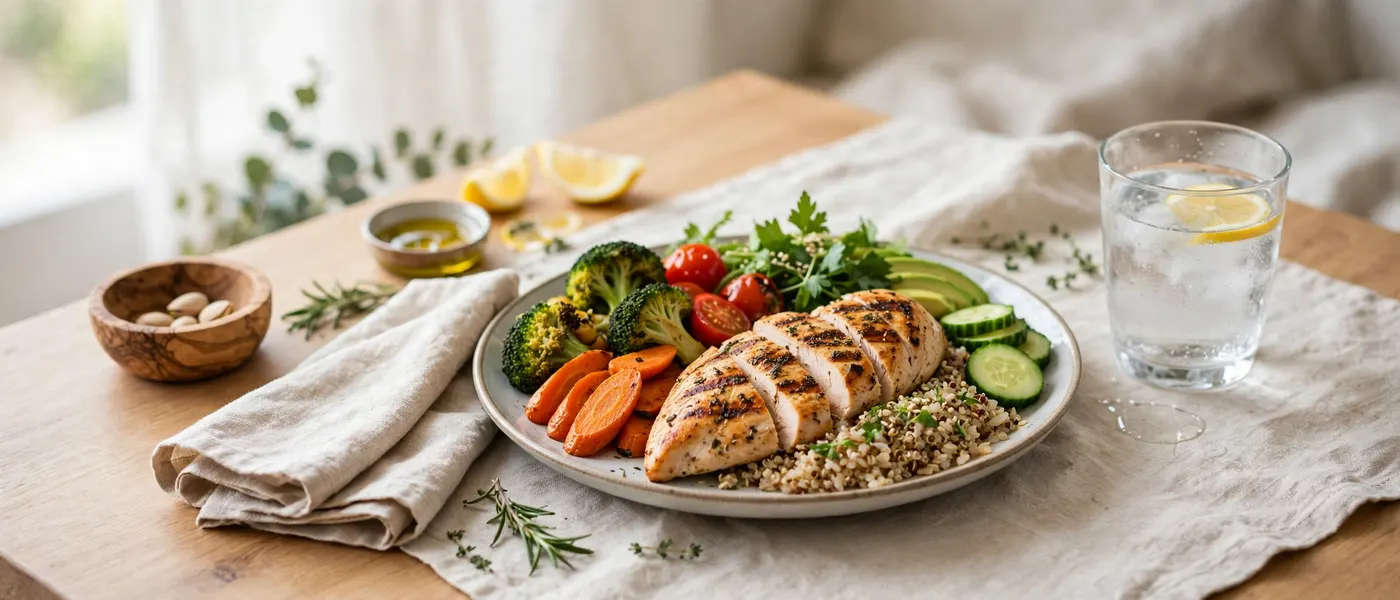
In general terms, a day might be a protein based breakfast such as eggs or Greek yogurt with fruit, a modest lunch built around chicken, fish, tofu or beans with vegetables and a small portion of grains, a small protein forward snack in the afternoon if hunger appears, and a smaller than usual dinner with protein first. Portions are individual: the point of the example is the pattern, protein at each meal, fiber across the day, fluids between meals, rather than the specific foods. The GLP-1 calorie calculator and GLP-1 macro calculator can help frame the overall amounts, and the GLP-1 meal plan guide turns the pattern into a sample day and a weekly rotation.
Brand by brand eating guides
The principles above apply across the class, but each medicine has its own context. There is a dedicated page for what to eat on Ozempic, what to eat on Wegovy, what to eat on Mounjaro and what to eat on Zepbound. For the other side of the plate, the GLP-1 foods to avoid guide explains which foods commonly worsen side effects, and why.
Frequently asked questions
How much protein should I eat on a GLP-1 medicine?
A commonly cited target during weight loss is 1.2 to 1.6 grams of protein per kilogram of body weight per day, spread across meals. Total food intake drops on these medicines, so planning protein at every meal matters more than it used to. The GLP-1 protein calculator on this site turns your weight into a daily range.
Do I have to stop eating carbohydrates on GLP-1 medicines?
No. The labels do not require a low carbohydrate diet. Most people simply eat smaller portions of everything, and many find that pairing carbohydrates with protein and fiber feels steadier than eating carbohydrates on their own. Whole grains, beans and vegetables are the carbohydrate sources that tend to work best.
Why do I feel full so quickly on a GLP-1 medicine?
These medicines slow the rate at which the stomach empties and reduce appetite signals. Food therefore stays in the stomach longer, and a portion that once felt normal can feel like too much. Eating slowly and stopping at the first feeling of fullness helps, because fullness can keep building after you stop.
What if I cannot finish a normal meal?
That is very common, especially after a dose increase. Smaller meals, eaten more often if needed, suit many people better than three large ones. Prioritizing the protein part of the meal first means the most important part gets eaten even when the meal stays unfinished.
Are any foods completely off limits on GLP-1 medicines?
The prescribing information does not ban specific foods. Some foods commonly make side effects worse or work against treatment goals, such as very greasy meals and sugary drinks, and the GLP-1 foods to avoid guide on this site explains those in detail. It is about what commonly causes trouble, not about forbidden foods.