What to Eat on Mounjaro
Mounjaro (tirzepatide) is used both for type 2 diabetes and, in its Zepbound form, for weight management, so eating on it blends the two themes: steady carbohydrates and smaller, protein first meals. The most common practical question is breakfast, and what to eat around the weekly injection. This page answers both in general educational terms, alongside the class wide principles in our what to eat on GLP-1 guide.
Breakfast, and the injection day question
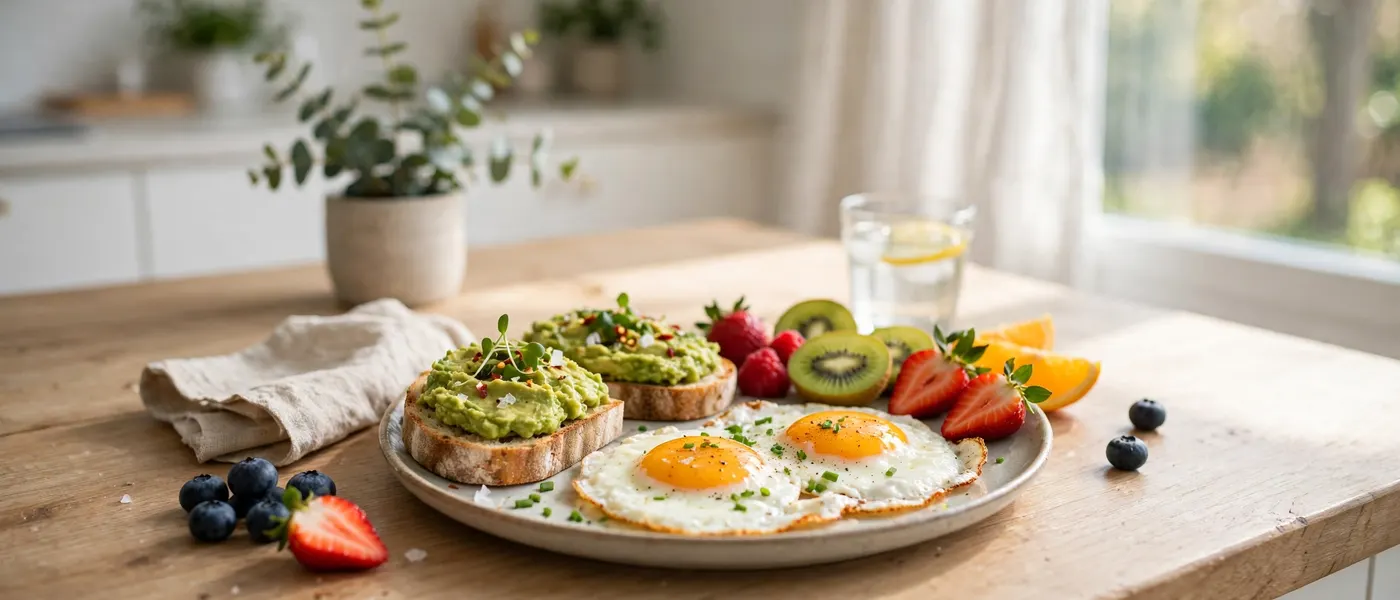
The Mounjaro label places no food conditions on the injection: it is given once a week, at any time of day, with or without food. In practice, many people notice a weekly rhythm: appetite is lowest and the stomach feels slowest in the first day or two after the dose, then hunger partly returns toward the end of the week. Breakfast on injection day and the day after is therefore often the smallest, plainest meal of the week: eggs, Greek yogurt with a little fruit, or oats in a modest portion. Larger and richer breakfasts can wait for the days when the stomach feels more forgiving. If you are choosing your injection day, the Mounjaro dosage chart shows how the weekly schedule and dose steps are laid out.
Protein and fiber basics for tirzepatide
The two nutritional priorities are the same as for the rest of the class. Protein first: a commonly cited target during weight loss is 1.2 to 1.6 grams per kilogram of body weight per day, planned at every meal rather than loaded into one, because total intake falls and muscle is at stake. The GLP-1 protein calculator sizes that for your weight. Fiber second, added gradually: constipation is a named reaction on the Mounjaro label, and fiber with enough fluid is the standard dietary response. Lentils and black beans each provide about 15 grams of fiber per cooked cup, chia seeds about 10 grams per ounce, and cooked oats about 4 grams per cup, all approximate. The GLP-1 fiber calculator turns your calorie intake into a daily target.
Queasy day foods people commonly reach for
Nausea and indigestion are among the most reported reactions in the Mounjaro side effects guide, clustered around dose increases. On days when the stomach feels unsettled, people commonly switch to small, bland, low fat foods for a day or two: dry toast, plain rice, bananas, clear or simple soups, plain crackers, and ginger in tea or food, which is a long standing household choice for queasiness. These are comfort patterns people report using, not treatments, and normal eating usually resumes as the feeling passes. Persistent vomiting, diarrhea, or being unable to keep fluids down is different: that needs prompt medical attention, not another food experiment.
Steady carbohydrates for blood sugar
For the many people taking Mounjaro for type 2 diabetes, carbohydrate quality still matters even though the medicine itself improves control. Whole grains, beans, lentils and vegetables digest slowly; refined starches and sugary drinks do not, and sugary drinks in particular deliver fast sugar with no fullness. Pairing carbohydrates with protein and fiber at the same meal steadies the rise further. Anyone also taking insulin or a sulfonylurea should be guided by their own care team, because those combinations carry a low blood sugar risk that food timing can affect.
Frequently asked questions
Should I eat before my Mounjaro injection?
The Mounjaro label does not tie the injection to food. It can be given at any time of day, with or without a meal. Many people keep the meal nearest their injection small and plain, simply because appetite is at its lowest and nausea at its most likely in the first day or so after each dose.
What is a good first meal after injection day?
Something modest and protein based: eggs, Greek yogurt, or a small portion of chicken or fish with vegetables. Rich, greasy or very large first meals are the ones most often regretted, because stomach emptying is slowest and appetite suppression strongest early in the weekly cycle.
Why does food seem less appealing on Mounjaro?
Mounjaro works on both GIP and GLP-1 receptors and strongly reduces appetite signals, an effect described in its prescribing information. Food noise quiets down, favorites lose their pull, and some people notice taste changes. It is an expected effect of the medicine rather than a problem with the food.
What helps on a queasy day on Mounjaro?
People commonly reach for small, bland, low fat foods: toast, rice, bananas, plain soup, crackers and ginger tea. Small amounts more often usually sit better than normal meals. If vomiting or diarrhea is persistent, or you cannot keep fluids down, that stops being a food question and should be raised with your care team promptly.
Do I need to eat differently on Mounjaro if I have type 2 diabetes?
The general pattern is the same, with one addition: steadier carbohydrate choices matter more. Whole grains, beans and vegetables, paired with protein and fiber, produce slower blood sugar rises than refined starches or sugary drinks. Anyone also using insulin or a sulfonylurea should follow their own care team guidance, because those medicines carry low blood sugar risk.