GLP-1 Snacks
Snacking changes on a GLP-1 medicine: portions shrink, and the snacks that work are the ones that earn their place with protein or fiber rather than filling the stomach with food that sits badly. This page collects small, protein forward snack ideas by category, plus what to keep at work and what suits queasy days. All of it is general education, and no specific brands are recommended.
What makes a snack work on GLP-1
A useful snack on these medicines is small enough not to trigger the over-full feeling, contains protein or fiber so it contributes to the day rather than just passing through, and is not so greasy or sweet that it provokes nausea or reflux. Planned snacks also do a quiet job of prevention: they close the long foodless gaps that otherwise end in one oversized evening meal, which is the pattern that causes the most discomfort described in our GLP-1 foods to avoid guide. Think of a snack as a small meal with a job, sized to about a third or less of your already reduced meal portions.
Dairy based ideas
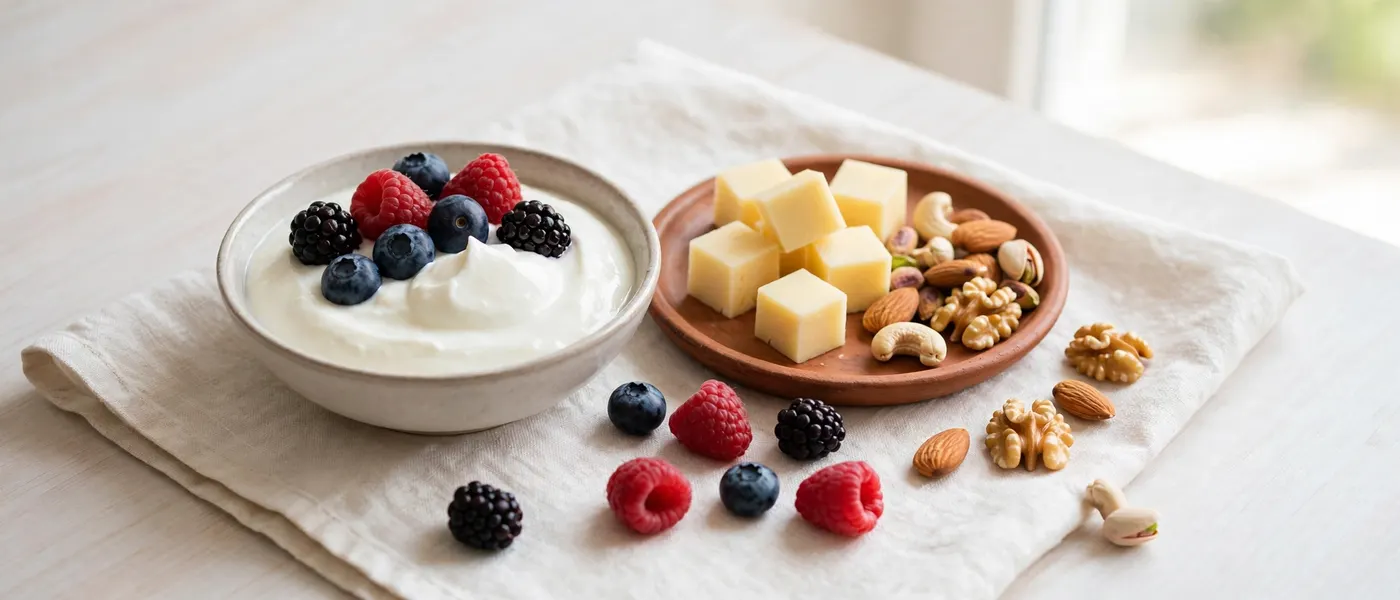
- Greek yogurt with berries. High in protein, easy to eat slowly, and raspberries add about 8 g of fiber per cup, all approximate. A half cup portion is plenty for most people.
- Cottage cheese with fruit or cucumber. Mild, soft and protein rich, and one of the easier snacks on a sensitive stomach.
- A small portion of cheese. Satisfying in a small amount; cheese is calorie dense and fatty, so keep the portion genuinely small to avoid the heavy feeling.
- A small glass of milk or kefir. Useful when solid food is unappealing but something protein containing is needed.
Nuts and seeds, with a portion note
Nuts and seeds bring protein, fiber and healthy fats in a very compact package, which is both their strength and their trap: a small handful is a snack, while eating from a large bag can quietly deliver a meal's worth of fat to a slow stomach. Portion them into small containers in advance. Chia seeds stand out for fiber, about 10 g per ounce, soaked into milk or stirred into yogurt as a small pudding. Pumpkin and sunflower seeds and a modest handful of almonds or walnuts round out the category.
Fruit plus protein pairings
Fruit alone is fine, but pairing it with a protein slows it down and keeps you satisfied longer. Apple slices with a spoonful of peanut butter, a medium pear (about 5.5 g of fiber, approximate) with a small piece of cheese, or berries folded into Greek yogurt are the standard combinations. Whole fruit is preferred over juice, which delivers the sugar without the fiber and without fullness.
Savory options
- A boiled egg. Portable, portion controlled by nature, and reliably tolerated.
- Edamame. Protein and fiber together, eaten slowly pod by pod, which suits a stomach that rewards slowness.
- Hummus with vegetable sticks. Chickpea based, so it brings both protein and fiber; keep the portion small and choose cucumber, pepper and carrot over chips.
- Roasted chickpeas. Crunchy like a packaged snack but with fiber and some protein; go easy on the salt and portion.
Snacks for queasy days
On days when nausea is in charge, the goal changes from protein targets to simply keeping something down and staying hydrated. People commonly fall back on plain crackers, dry toast, plain rice cakes, applesauce, banana, and ginger tea, in small amounts, eaten slowly and often. These are gentle household standbys, not treatments. The fuller picture of nausea timing and triggers is in the side effects guides, for example Mounjaro side effects, and persistent vomiting or inability to keep fluids down needs medical attention.
Keeping snacks at work
Work is where snack plans usually fail, because the available options are vending machines and colleagues' biscuits. A desk drawer or locker stash solves it: portioned nuts or seeds, roasted chickpeas, plain oatcakes, and a shelf stable milk or protein drink for difficult days if you use them. If there is a fridge, small pots of Greek yogurt and boiled eggs cover the week. Planning snacks at work also protects the protein target on the days when lunch gets skipped in a meeting, which on these medicines can otherwise mean almost no protein before dinner.
Frequently asked questions
How often should I snack on a GLP-1 medicine?
Only when it serves a purpose: closing a protein gap, preventing a long stretch with no food that ends in an oversized meal, or getting through a low appetite day with small regular intake. One or two planned small snacks suit most people. Constant grazing is different, because it can keep the stomach permanently loaded on a slow emptying cycle.
Are protein bars a good snack on GLP-1 medicines?
They are convenient, and convenience matters on low appetite days, but they vary widely: some are closer to candy bars with added protein and a lot of sugar. If you use them, read the label for protein, sugar and total size, and treat whole foods such as Greek yogurt, eggs or nuts as the default where you can.
What if snacks make me nauseous?
Make them smaller, plainer and drier, and eat them slowly, sitting up. On rough days, plain crackers, toast, applesauce or ginger tea are the options people commonly fall back on. If nausea is persistent or you cannot keep fluids down, that is a symptom to raise with your care team, not a snack problem.
What is a good evening snack on a GLP-1 medicine?
Something small, protein based and not too close to bedtime: a little Greek yogurt, a small piece of cheese, or a warm milky drink if milk sits well with you. Large or rich evening snacks are the classic reflux trigger, because the stomach empties slowly and you then lie flat on it.