GLP-1 Foods to Avoid
Search for foods to avoid on these medicines and you will find strict lists. The truth is simpler and less dramatic: the labels ban nothing. What follows are the foods and drinks that commonly cause trouble on a GLP-1 medicine, meaning they worsen nausea, reflux or blood sugar swings, or quietly work against treatment goals, with the reason for each.
First, an honest note: no food is banned by the label
None of the prescribing information for Ozempic, Wegovy, Mounjaro or Zepbound lists forbidden foods. These medicines slow stomach emptying and reduce appetite, and every item below causes problems through those two effects, or through plain nutrition. Avoid here means limit, shrink the portion, or save for a settled dose and a good day, not never again. Tolerance also varies a lot between people, and it changes over the course of treatment, so treat this page as a map of common triggers rather than a set of personal rules.
Very greasy and fried foods
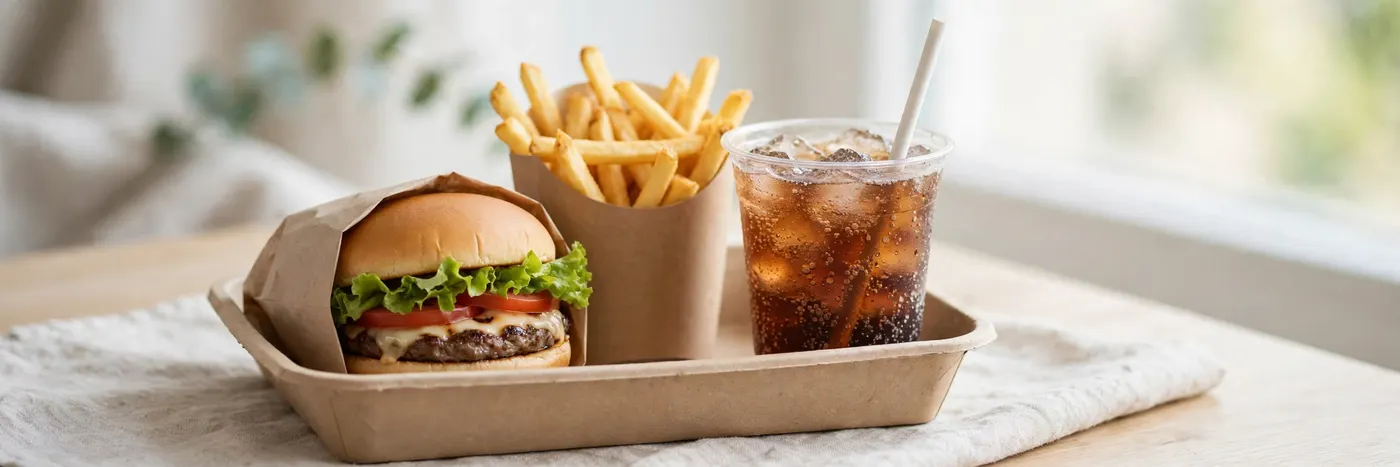
The single most reported trigger. Fat slows stomach emptying in everyone; on a GLP-1 medicine the stomach is already slowed, so a fried meal can sit heavily for hours, producing nausea, bloating and sometimes vomiting. Fried chicken, fatty fast food, rich creamy sauces and heavily oiled dishes are the usual examples. Grilled, baked or air cooked versions of the same foods are typically tolerated far better, and small portions of the fried original usually become manageable again at a stable dose.
Large high fat meals
Portion and fat multiply each other. Even foods that are fine in small amounts, cheese, nuts, fatty cuts of meat, can cause a miserable evening when a large amount is eaten at once, because the stomach has a hard limit on what it can move along. This is also why celebrations and restaurant meals feature in so many stories: it is rarely one forbidden food, it is the total load. Eating slowly and stopping early is the countermeasure, as the side effects guides for Ozempic and Wegovy both describe.
Sugary drinks and juices
Regular soda, sweet tea, energy drinks, sweetened coffee drinks and fruit juice deliver sugar faster than nearly any food, with no fiber to slow it down. For people with diabetes that means sharp blood sugar rises the medicine then has to chase. For everyone, very sweet liquid on an empty, slow stomach is a common nausea trigger, and liquid calories do not register fullness the way food does, so they quietly crowd out the protein the day was supposed to contain. Water and unsweetened drinks are the straightforward swap.
Alcohol
Alcohol earns its place here for several reasons at once. It can lower blood sugar, which matters especially for people also using insulin or a sulfonylurea, where the labels already warn about low blood sugar risk. It commonly worsens reflux on a slowly emptying stomach, it adds calories with no protein or fiber, and it loosens the appetite discipline the medicine is providing. Many people find their interest in alcohol fades on treatment in any case. There is no universal safe amount that applies to everyone on these medicines, so personal guidance belongs to your own care team.
Very spicy foods
Spice does not interact with the medicine, but it irritates a stomach and esophagus that are already prone to reflux and indigestion, both labeled reactions across the class. People who loved hot food often find their comfortable ceiling drops, especially in the evening. Milder seasoning, and keeping very spicy meals small and early in the day, are the usual adjustments rather than total avoidance.
Carbonated drinks
Fizzy drinks add gas to a stomach that is emptying slowly and already generating the belching and bloating the labels list. The result can be real discomfort that has nothing to do with sugar, which is why even sugar free sparkling drinks bother some people. Still water is the reliable default, and letting fizzy drinks go flat helps if you keep them.
Ultra processed snacks
Chips, pastries, candy and similar snacks are engineered to be eaten quickly and in quantity, with little protein or fiber to slow them down or satisfy. On a GLP-1 medicine they cause a specific problem: they can be eaten before fullness signals arrive, then sit heavily, and they displace the protein rich food the day needed. They also tend to be the foods people graze on without noticing. The GLP-1 snacks guide covers swaps that keep the convenience without the downside.
Brand questions, answered together
People search for foods to avoid on Ozempic, on Wegovy, on Mounjaro and on Zepbound as if each had its own list. They do not: all four medicines slow stomach emptying and reduce appetite, so the trigger categories above are shared, and the differences between brands are differences of dose and degree, not of kind. The brand pages take the positive side of the same coin: what to eat on Ozempic, what to eat on Wegovy, what to eat on Mounjaro and what to eat on Zepbound.
Frequently asked questions
Is any food actually forbidden on GLP-1 medicines?
No. None of the GLP-1 prescribing information bans specific foods. The foods discussed as ones to avoid are foods that commonly worsen side effects, such as nausea and reflux, or that work against treatment goals, such as sugary drinks for blood sugar. It is practical guidance, not a rule from the labels.
Can I ever eat fried food again on a GLP-1 medicine?
Most people can, in small amounts, once their dose is stable and they know how their stomach responds. Fried and greasy food is the most common nausea trigger because fat slows stomach emptying further on a stomach that is already slowed. A few bites at a settled dose is a very different experience from a large portion during dose escalation.
Why does soda bother me now when it never used to?
Two reasons. The carbonation adds gas to a stomach that empties slowly, and belching and bloating are already labeled reactions of these medicines. The sugar in regular soda also arrives fast and can leave people feeling queasy. Sparkling water bothers some people for the gas reason alone, so still drinks are the safer default.
What about coffee on GLP-1 medicines?
Coffee is not restricted by the labels, and many people keep drinking it. It can worsen reflux or nausea in some people, particularly on an empty stomach or in large amounts, and sweetened coffee drinks quietly add a lot of sugar. Having coffee with or after a small protein containing breakfast is the pattern that tends to sit best.
Is sugar completely off limits on GLP-1 medicines?
No, but it is the food group most worth moderating. Added sugar brings calories with no protein or fiber, spikes blood sugar in people with diabetes, and very sweet food on an empty stomach commonly worsens nausea. Small amounts of dessert after a meal are a different matter from sugary drinks and snacks eaten alone through the day.