Eating Out on a GLP-1: Menus, Portions and Comfort
Eating out on a GLP-1 medicine does not need to stop, but it does work better with a plan: read the menu for protein and lighter cooking, treat restaurant portions as two meals, and stop at comfortable fullness. This page covers menu strategies, portion tactics, alcohol and timing in general terms. It is education only, not medical advice.
Why restaurant meals feel different on treatment
Two effects explain most restaurant difficulties on these medicines. Appetite is reduced, so hunger at the table is weaker than habit expects, and stomach emptying is slower, so food stays in the stomach longer and fullness keeps building after you stop eating. Restaurant portions, which were generous before treatment, can therefore become far more than a comfortable meal. Rich sauces, fried foods and large amounts of fat are also the items most likely to trigger nausea, reflux or an evening of discomfort afterwards.
None of that means avoiding restaurants. Meals out are social, enjoyable and part of normal life, and treatment is long term, so it has to fit around them. The people who manage best tend to change tactics rather than venues: they choose dishes differently, order in a different order, and give themselves permission to leave food or take it home. The sections below set out those tactics in the order you would use them, from reading the menu to the day of the week you book.
Reading the menu with a smaller appetite
Start by looking for the protein and the cooking method. Grilled, baked, steamed or roasted fish, chicken, eggs, beans or tofu give you the protein that matters most when intake is low, without the fat load of deep fried or heavily creamy dishes. Vegetables and salads add volume and fiber gently. Very greasy meals, rich creamy sauces and large fried sides are the common trouble spots named in the GLP-1 foods to avoid guide, and restaurants concentrate exactly those things, so a quick scan for lighter cooking is worthwhile.
It also helps to decide before you order, rather than after the bread or starters arrive. Eating slowly matters more in a restaurant, where courses and conversation stretch the meal: fullness signals need time, and a pause between courses can be the difference between stopping comfortably and stopping too late. If a menu is available online, a calm look at home takes the pressure off choosing while hungry, rushed or surrounded by other people ordering large meals.
Portion tactics that actually work
The simplest tactic is to order an appetizer as your main course. Starters are usually closer to the portion a person on treatment can finish, and many are protein based: soup with lentils or chicken, prawns, a small fish dish, or eggs. Adding a side of vegetables or a small side salad turns an appetizer into a balanced meal. Sharing is the second tactic: one main course and an extra side, split between two people, often matches appetites better than two full mains, especially when one person is on treatment.
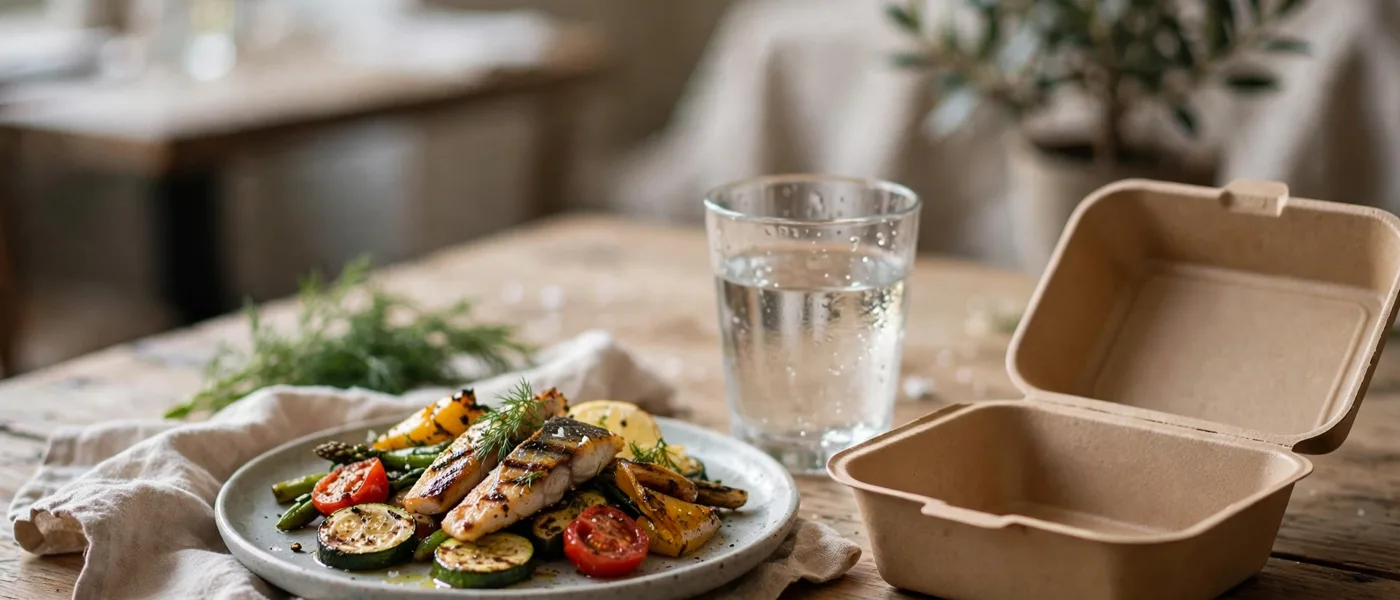
The third tactic is to plan the take home box from the start. Asking for a container is normal, expected, and far easier than trying to finish a portion out of politeness. Many people quietly decide, when the plate arrives, that half is for tomorrow, and eat the protein and vegetables from their half first. Buffets and set menus need the most care, because the structure encourages tasting everything; a single plate, chosen deliberately, with protein first, keeps the occasion enjoyable without the overfull aftermath. If you do overeat, a short gentle walk after the meal and a lighter next meal are the usual, sensible response.
Drinks and alcohol at the table
Water is the easiest win at a restaurant table. Sipping steadily helps digestion and offsets the reduced thirst that comes with reduced appetite, while large sugary drinks add calories without fullness. Many people keep fizzy drinks small, because gas plus a slowly emptying stomach can feel uncomfortable. The GLP-1 water intake calculator gives a general daily fluid target if you want a reference point.
Alcohol deserves its own pause. The labels do not ban alcohol, but many people on treatment report that a drink affects them more than it used to, and alcohol adds calories that work against weight goals. If you drink, eating protein containing food alongside, keeping the amount smaller than your old normal, and alternating with water are the cautious patterns people commonly describe. The dedicated alcohol on Ozempic guide explains the label position, including the low blood sugar context for people with diabetes, in full.
Timing meals around injection day
In general terms, many people notice appetite is lowest and nausea is most likely in the first day or two after their weekly injection, and that food feels easier later in the week as the effect steadies. That pattern is a report from experience, not a label rule, and it varies by person and by dose stage, especially just after a dose increase. Still, it is a practical planning point: a big celebration meal often sits more comfortably later in the injection week than the day after the injection.
The same logic applies within the day. A very large or rich meal close to bedtime is more likely to cause reflux and broken sleep when the stomach empties slowly, so earlier, smaller evening meals tend to be kinder. None of this requires moving your injection, changing its timing, or skipping a dose for a social event. Dose timing is a prescriber topic; meal timing is the flexible part, and it is the part this page is about.
Handling the social side
The awkward part of eating out on treatment is rarely the food; it is the comments. Ordering small, leaving food, or skipping dessert can draw questions you may not want to answer in detail. Short, boring explanations work best: that you are eating lighter at the moment, that the starter was exactly enough, that you are taking the rest home for tomorrow. You do not owe a table of friends a medical briefing, and most people accept a simple answer and move on.
It also helps to protect the parts of the occasion that are not about volume: choosing the restaurant, enjoying the first tastes slowly, and treating a finished appetizer plate as a success rather than a failure. People who keep enjoying meals out on treatment usually describe the same shift: quality and company first, quantity last. If meals out repeatedly end in vomiting, severe pain or inability to eat for days afterwards, that pattern needs a conversation with your own clinician, not tougher tactics.
Frequently asked questions
Can I still eat out while taking a GLP-1 medicine?
Yes. The prescribing information does not ban restaurant meals or any specific cuisine. Most people adjust how they order rather than whether they go: lighter cooking methods, a protein based dish, smaller portions, eating slowly, and stopping at comfortable fullness. Rich, very greasy meals are the ones most likely to cause discomfort.
What is the best thing to order on a GLP-1 medicine?
A practical pattern is an appetizer sized, protein based dish as the main course, such as grilled fish, chicken, prawns, eggs, beans or tofu, plus vegetables or a small salad. Appetizer portions are usually closer to what a reduced appetite can finish, and protein first protects the part of the meal that matters most.
What should I do if the portion is too big?
Decide early that part of the meal goes home, and ask for a takeaway container without apology. Eat the protein and vegetables first, eat slowly, and stop at the first comfortable feeling of fullness, because fullness keeps building after you stop when stomach emptying is slow. Leftovers planned from the start are a tactic, not a failure.
Is it better to eat out on a particular day after my injection?
In general terms, many people find the first day or two after a weekly injection the hardest for appetite and nausea, and meals feel easier later in the week. That is experience, not a label rule, and it varies. Planning a large meal later in the injection week helps some people, but never move or skip a dose for a meal without prescriber advice.
Can I drink alcohol when eating out on a GLP-1 medicine?
The labels do not ban alcohol. Many people report being affected by less alcohol than before, and alcohol adds calories that work against weight goals. People with diabetes also need the low blood sugar context described in the alcohol on Ozempic guide on this site. If you drink, smaller amounts, with food and water alongside, are the cautious pattern.