GLP-1 Grocery List: The Staples That Make Eating Easier
A good GLP-1 grocery list is not a special diet list. It is a short set of staples that makes protein easy, fiber steady, queasy days manageable and fluids hard to forget, in portions that match a smaller appetite. This page walks the store aisle by aisle in printable style sections. It is education only, not a personal diet plan.
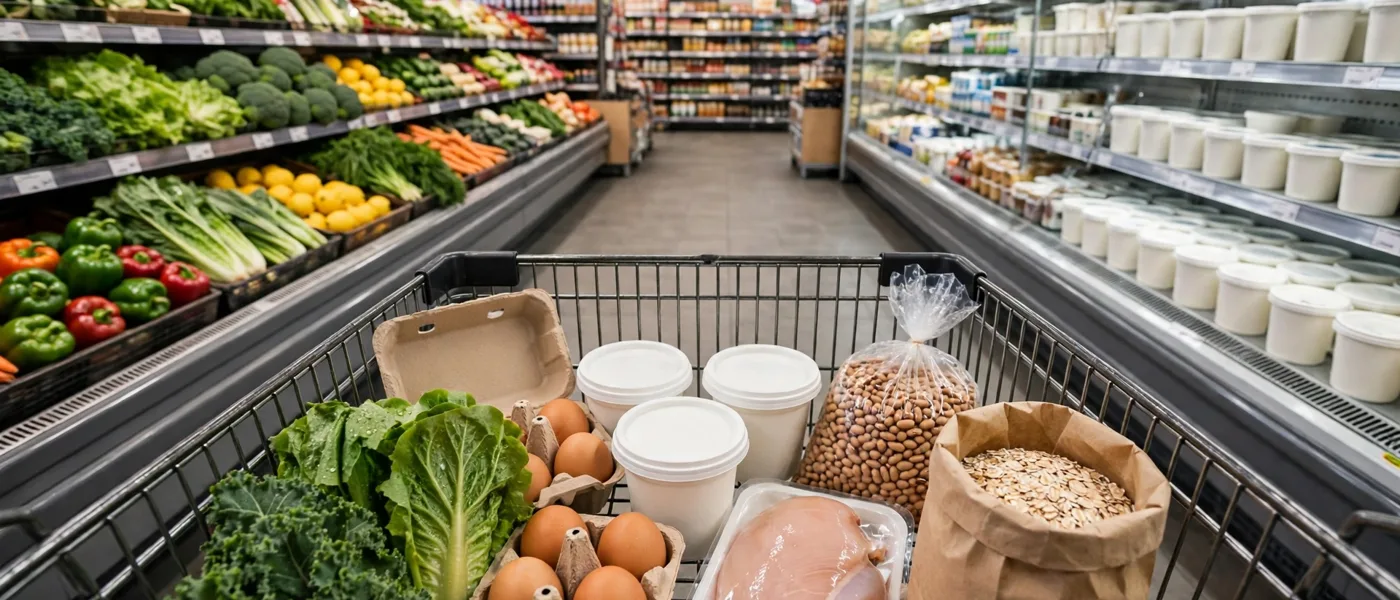
How to use this grocery list
GLP-1 medicines reduce appetite and slow stomach emptying, so most people eat less at each sitting and feel full for longer. Shopping changes with that. Large quantities of rich food go uneaten, while small, ready portions of protein and gentle foods get used every day. The aim of this list is coverage, not volume: something protein based for every meal, a few fiber foods you actually like, a small stock for days when nausea makes normal food unappealing, and drinks you will reach for without thinking.
You do not need to buy everything here in one trip. Treat each section as a pick list and choose two or three items per section that suit your taste, budget and culture. A commonly cited protein target during weight loss is 1.2 to 1.6 grams of protein per kilogram of body weight per day, and a standard fiber reference is about 14 grams of fiber per 1,000 calories eaten. Those two numbers explain the shape of the list below: protein first, fiber woven through the day, and nothing that depends on a large appetite to finish.
Produce aisle: fiber, volume and gentle options
Vegetables and fruit do quiet, important work on these medicines. They add fiber, water and volume to meals without much fat, and fat is the part of a meal most likely to worsen nausea. Keep a simple rotation rather than a long list: leafy greens or salad leaves, cucumbers and tomatoes for easy sides, carrots and peppers for cooking or snacking, and frozen mixed vegetables for days when fresh shopping has not happened. Frozen vegetables keep their nutrition, wait patiently in the freezer, and suit the smaller, less predictable appetite that comes with treatment.
For fruit, choose options you can eat in small amounts often. Raspberries (about 8 g of fiber per cup) and a medium pear (about 5.5 g of fiber) are the fiber standouts already used on this site. Bananas and applesauce are gentle choices many people keep for unsettled days. Buying fruit in smaller quantities, or frozen, avoids the waste that comes when appetite drops after a dose increase and fresh food sits untouched.
Meat, fish and chilled protein
This is the anchor aisle, because protein is easiest to miss when meals shrink. Useful staples include eggs, chicken or turkey, fish such as salmon or white fish, and lean cuts you already cook well. Smaller pack sizes, or packs you can split and freeze in single portions, fit treatment better than family packs that assume a big shared meal. Ready cooked options, such as rotisserie chicken or cooked prawns, help on low energy days when cooking from raw feels like too much.
In the chilled cabinets, Greek yogurt and cottage cheese earn a regular place. They are protein dense, soft, and easy to eat in small portions, and plain versions let you add your own fruit instead of extra sugar. Milk or fortified alternatives, sliced cheese for small snacks, and tofu or tempeh for plant based meals round out this section. The pattern matters more than any single item: at each shop, make sure the cart holds enough protein foods to build every meal around, because that is the habit the what to eat on GLP-1 guide is built on.
Store cupboard: beans, lentils, oats and grains
The dry goods aisle supplies the fiber backbone of the list. Lentils (about 15 g of fiber per cooked cup) and black beans (about 15 g per cooked cup) combine fiber and plant protein in one food, and tinned versions make them instant. Cooked oats (about 4 g of fiber per cup) make a gentle, warm breakfast that many people tolerate well. Chia seeds (about 10 g of fiber per ounce) stir into yogurt or porridge in spoonfuls, which suits a gradual fiber increase far better than a sudden overhaul.
Add modest amounts of grains you enjoy, such as rice, pasta or wholegrain bread, remembering that portions on treatment are usually smaller than before. Tinned tomatoes, soups and simple sauces help turn protein and beans into a meal quickly. Keep quantities honest: cupboard foods keep well, so there is no need to stockpile, and a shorter list you rotate is easier to manage than a crowded shelf of foods bought with good intentions and never opened.
Foods for queasy days
Most people have days, often in the first days after an injection or a dose increase, when normal meals do not appeal. A small queasy day stock prevents those days becoming days of eating nothing, or of reaching for whatever is nearest. Plain crackers, plain rice cakes, dry toast style foods, clear soups and broths, applesauce, bananas and ginger tea are the kinds of items people commonly keep for this purpose. Small and plain beats rich and interesting when the stomach is unsettled.
Protein still matters on those days, just in smaller forms: a yogurt, a milky drink, a protein shake you tolerate, or a small portion of soup with lentils or chicken. The GLP-1 nausea remedies guide covers eating habits for these days in more detail. If vomiting is repeated, or you cannot keep fluids down, that is not a shopping problem; it is a reason to contact your own clinician promptly.
Drinks and hydration staples
Reduced appetite often comes with reduced thirst, and eating less food also means taking in less water from food. Keep drinks visible and easy: water as the default, plus whatever makes drinking through the day more likely for you, such as sparkling water, herbal teas, or diluted squash. Having a bottle or jug in the fridge, already cold, removes friction. The GLP-1 water intake calculator gives a general daily target based on body weight and activity.
Sugary drinks are the usual item to leave off the list. They add calories without protein, fiber or fullness, and they work against the goals most people are treated for. Alcohol is a separate decision covered in the alcohol on Ozempic guide. For everyday hydration, the test is simple: if the drinks in your cart help you sip steadily all day without adding a meal worth of sugar, the section is done.
Putting the list together each week
A workable weekly rhythm is to shop from the sections in order: produce first, then protein, then cupboard gaps, then queasy day and drinks top ups. Many people find one main shop plus one small fresh top up suits a smaller appetite better than one very large shop. Before you go, check what is still in the freezer and cupboard, because treatment changes how fast food moves. Writing the list by these sections, on paper or in a phone note, is the printable habit this page is designed for: short, repeatable, and easy to hand to someone else if they shop for you.
Frequently asked questions
What should be on a GLP-1 grocery list every week?
The core of the list stays the same each week: protein foods for every meal, such as eggs, chicken, fish, Greek yogurt, tofu, beans or lentils, a few fiber foods like oats, vegetables and fruit, gentle plain foods for queasy days, and drinks that make steady sipping easy. Quantities are usually smaller than before treatment, because appetite is smaller.
How much protein should my shopping cover?
A commonly cited target during weight loss is 1.2 to 1.6 grams of protein per kilogram of body weight per day. In shopping terms, that means buying a protein food for each meal rather than relying on one protein heavy meal a day. The GLP-1 protein calculator on this site turns your weight into a daily range.
Which grocery foods help most with fiber?
The fiber standouts used on this site are lentils and black beans, at about 15 grams per cooked cup, chia seeds at about 10 grams per ounce, raspberries at about 8 grams per cup, a medium pear at about 5.5 grams, and cooked oats at about 4 grams per cup. Add fiber gradually and drink fluids alongside it.
What should I keep at home for queasy days?
Plain, small and simple foods are the usual stock: crackers, plain rice cakes, clear soups and broths, applesauce, bananas, ginger tea, and soft protein options like yogurt. These are for days when nausea makes normal meals unappealing. Repeated vomiting, or being unable to keep fluids down, needs prompt advice from your own clinician.
Are there foods I should leave off the list?
No food is banned by the prescribing information. In practice, very greasy foods commonly worsen nausea, and sugary drinks add calories without protein, fiber or fullness. Most people simply buy less of those and more of the protein, fiber and gentle foods that make treatment days easier.