GLP-1 Fiber Foods: Gentle Sources to Add Slowly
Fiber is one of the most useful tools on a GLP-1 medicine, because slower digestion commonly brings constipation, and fiber helps stools hold water and pass more easily. The catch is speed: added too fast, fiber causes gas and bloating. This page lists gentle GLP-1 fiber foods with the approximate values used on this site, and how to build up slowly. It is education only.
Why fiber matters more on a GLP-1 medicine
GLP-1 medicines slow the movement of food through the digestive system, and people also eat less food overall, which usually means less fiber than before. Constipation is a listed effect of this medicine class, and low fiber intake makes it more likely. Fiber adds bulk to stools and helps them hold water, which makes them softer and easier to pass. It also steadies meals, adds volume without many calories, and supports the gut in ways that matter more, not less, when total food intake has fallen.
A standard reference point used across this site is about 14 grams of fiber per 1,000 calories eaten. That figure is a guide for planning, not a target to hit on day one. If your current intake is low, which is common, the route to that level is a gradual climb over a few weeks. The GLP-1 fiber calculator turns your calorie intake into a daily fiber target, so you can see the gap between where you are and where a steady, comfortable intake would sit.
The gentle fiber foods, with approximate values
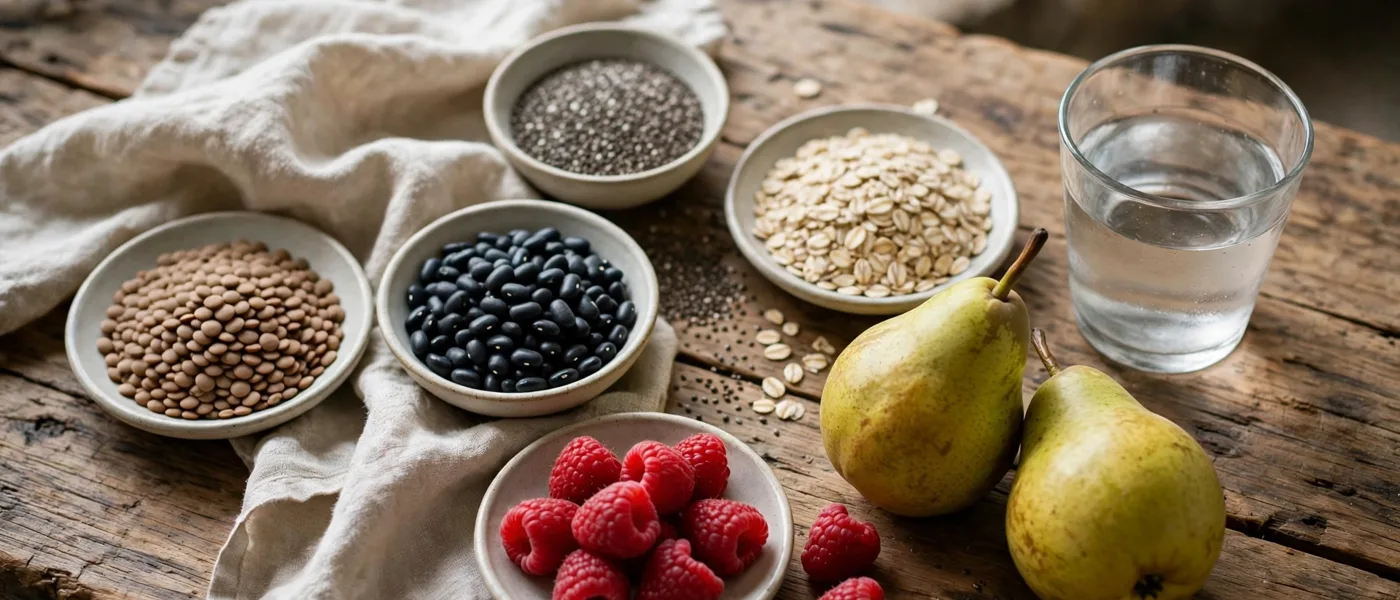
The foods below are the ones already used on the live eating pages of this site, with their approximate fiber values, so the numbers stay consistent wherever you meet them here. Lentils provide about 15 g of fiber per cooked cup, and black beans provide about 15 g per cooked cup. Both also bring plant protein, which makes them doubly useful when meals are small. Chia seeds provide about 10 g per ounce, raspberries about 8 g per cup, a medium pear about 5.5 g, and cooked oats about 4 g per cup.
Values are approximate because ripeness, variety and cooking change fiber a little, and cup sizes vary. Treat them as planning numbers rather than laboratory figures. In practice, a day that includes a cup of lentil soup, oats at breakfast and a pear already covers a large share of a typical target, without any supplement. Ordinary vegetables, whole grains, nuts and other fruit all add smaller amounts alongside these standouts, and variety across the week matters more than perfection on any single day.
How to add fiber slowly
The gradual rule exists because fiber ferments in the gut, and a sudden large increase commonly causes gas, bloating and cramping that can be mistaken for the medicine getting worse. A workable pattern is one change at a time: add a single new fiber food, in a small portion, for several days, and let your gut settle before the next change. Swapping breakfast to oats one week, adding beans or lentils at lunch the next, and making fruit the default snack after that is the pace that suits most people.
Portion size is part of the same lesson. A full cup of beans can be a shock to a system that has eaten little fiber for months, while a quarter cup stirred into soup is usually well tolerated. Cooked fiber foods are often gentler than large raw salads early on, and warm foods like lentil soup, bean chilli and porridge combine fiber with fluid in a way that helps twice. If a step causes a lot of discomfort, hold at the previous level for longer rather than pushing through; the goal is a habit you keep, not a test you pass.
Fiber needs fluids alongside it
Fiber works with water. Without enough fluid, added fiber can make stools harder rather than softer, which is the opposite of the aim. Sipping water steadily through the day, rather than drinking a large amount at once, supports digestion and helps fiber do its job. Reduced appetite often comes with reduced thirst on these medicines, so drinking needs to be deliberate: a glass with each meal and a bottle nearby between meals is a simple system that works for many people.
Warm drinks, soups and water rich foods like fruit all count toward the same picture. The GLP-1 water intake calculator gives a general daily target from body weight and activity if you want a number to aim at. If you have a medical reason to limit fluids, such as some heart or kidney conditions, that instruction from your own clinician comes first, and fiber changes should be discussed with them rather than worked out from a general page.
Fiber foods and constipation
Fiber is one part of the constipation picture, alongside fluids and movement. The GLP-1 constipation remedies guide covers the full set of habits that commonly help, including walking after meals and not ignoring the urge to go. Food based fiber is the gentlest starting point, and for many people it is enough once intake, fluids and movement are all addressed together, given a few weeks to settle.
Know the warning signs that take a problem out of the food category. Severe or worsening stomach pain, vomiting, blood in the stool, or constipation that does not ease despite steady changes all need prompt advice from your own doctor or pharmacist. The labels for this class also state that these medicines are not recommended for people with severe gastroparesis, a condition where the stomach already empties too slowly, which is another reason persistent severe symptoms belong in a clinical conversation, not on a food list.
A simple way to build a fiber day
In general terms, a comfortable fiber day might start with cooked oats and raspberries, include a lentil or bean based lunch, a pear or a small handful of chia stirred into yogurt as a snack, and vegetables with dinner. Spread across the day like that, fiber arrives in small, tolerable amounts, each with fluid nearby, instead of in one large serving. The what to eat on GLP-1 guide shows how fiber sits inside the wider pattern of protein first, smaller portions and fluids through the day.
Frequently asked questions
What are the best GLP-1 fiber foods?
The gentle standouts used on this site are lentils and black beans, at about 15 grams of fiber per cooked cup, chia seeds at about 10 grams per ounce, raspberries at about 8 grams per cup, a medium pear at about 5.5 grams, and cooked oats at about 4 grams per cup. Ordinary vegetables, fruit and whole grains add smaller amounts alongside them.
How much fiber should I aim for on a GLP-1 medicine?
A standard reference point is about 14 grams of fiber per 1,000 calories eaten. The GLP-1 fiber calculator on this site turns your calorie intake into a daily target. If your current intake is well below that level, build toward it gradually over a few weeks rather than jumping straight to it.
Why does adding fiber sometimes make me feel worse?
Fiber ferments in the gut, and a sudden large increase commonly causes gas, bloating and cramping. That reaction is usually about speed, not about fiber itself. Adding one food at a time, in small portions, with fluids alongside, and holding each step for several days, is the pattern most people tolerate well.
Do I need more water when I eat more fiber?
Yes. Fiber helps stools hold water, so it needs fluid available to work with. Without enough fluid, added fiber can make stools harder. Sipping water steadily through the day, and counting soups, warm drinks and fruit as part of the picture, is the usual approach, unless your own clinician has told you to limit fluids.
Can fiber foods fix constipation on their own?
Sometimes, especially when low fiber, low fluids and low movement are all part of the cause. The constipation remedies guide on this site covers fiber, fluids and movement together. Severe pain, vomiting, blood in the stool, or constipation that does not ease needs prompt advice from your own doctor or pharmacist.