GLP-1 Constipation Remedies: Fiber, Fluids and Movement
Constipation is listed on the labels for GLP-1 medicines such as Ozempic, Wegovy, Mounjaro and Zepbound, because digestion slows down on these medicines. This page covers GLP-1 constipation remedies in plain language, including GLP-1 constipation foods, fluids and movement, and the warning signs that need care. It is education only, not medical advice.
Why constipation happens on GLP-1 medicines
These medicines slow stomach emptying and slow the movement of food through the gut, and they also reduce how much people eat and drink. Less food, less fluid and slower movement together commonly mean stools that are less frequent, harder and more difficult to pass. Constipation is listed among the common reactions in the prescribing information for this class, and like other stomach related reactions it is often most noticeable after starting or after a dose increase, when intake has dropped the most.
That also explains why the remedies below work as a set. Fiber without fluid can make stools harder rather than softer, and fluid without fiber or movement often does only part of the job. The three levers work together.
GLP-1 constipation foods: adding fiber gradually
Fiber adds bulk and helps stools hold water, which makes them softer and easier to pass. A standard reference point used on this site is about 14 grams of fiber per 1,000 calories eaten. The key word is gradually. Jumping from very little fiber to a lot in a few days commonly causes gas, bloating and cramping, which can be mistaken for the medicine itself getting worse. Raise fiber step by step over a few weeks, one change at a time.
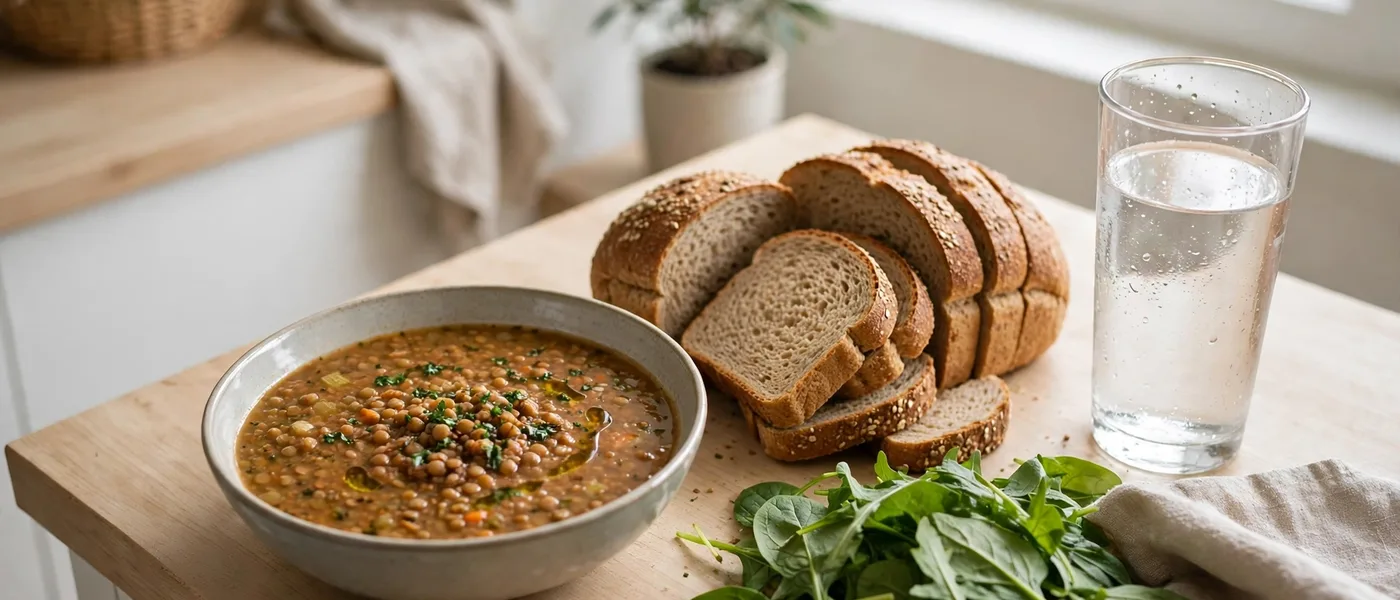
- Beans and lentils. Among the richest everyday fiber sources, and they bring protein at the same time.
- Oats and whole grains. Porridge, whole grain bread and brown rice are gentle ways to add fiber at meals you already eat.
- Vegetables and fruit. Vegetables at lunch and dinner, and fruit such as pears, berries or kiwi, spread fiber across the day.
- Seeds. Ground flax or chia stirred into yogurt, soup or porridge adds fiber in a small volume, which suits a reduced appetite.
If appetite is small, think in terms of fiber density rather than large salads. A modest bowl of lentil soup can deliver more fiber, in a form that sits comfortably, than a large plate of raw vegetables that never gets finished.
Fluids: the partner fiber needs
Fiber works by absorbing water. Without enough fluid, extra fiber can firm stools up instead of softening them. Reduced appetite often comes with reduced thirst, so drinking needs to become deliberate: keep water nearby, sip through the day, and treat soup, tea and other drinks as part of the total. Warm drinks in the morning suit some people and can pair with a regular toilet routine after breakfast, when the gut is naturally more active. The water intake calculator linked below gives a general daily target based on body weight and activity.
Movement and routine
Regular movement supports gut movement. A daily walk, including a short walk after meals, is the simplest version and fits most people. Routine helps too: eating at roughly regular times, not ignoring the urge to go, and allowing unhurried time in the bathroom all support the slower gut these medicines create. Straining hard and often is not helpful and can cause its own problems, so if stools remain hard despite fiber, fluids and movement, that is a conversation for your pharmacist or doctor rather than a reason to push harder.
What the labels advise about severe stomach problems
The labels for this class carry specific cautions about severe stomach problems. Because these medicines slow stomach emptying, the prescribing information states they are not recommended for people with severe gastroparesis, a condition where the stomach already empties too slowly. The labels also describe severe stomach pain as a warning sign that needs assessment, including for pancreatitis and gallbladder problems. Over the counter constipation products exist, but the labels do not name a preferred one, and some products are not suitable for everyone, for example people with kidney problems or people taking certain other medicines. Ask a pharmacist before starting one rather than choosing from advertising.
When to seek care promptly
Get medical care promptly for severe or worsening stomach pain, repeated vomiting, being unable to pass gas or stools with a swollen or very uncomfortable abdomen, or blood in the stool. Constipation that continues despite a steady routine of fiber, fluids and movement, or that alternates with diarrhea, is also worth raising with your doctor rather than managing alone for a long period. New or unexplained bowel changes always deserve a proper assessment, whether or not a GLP-1 medicine is part of the picture.
Building the habits into a normal day
The remedies above work best as a quiet daily system rather than as an emergency response once several days have passed. A workable pattern is a fiber containing breakfast such as porridge or whole grain toast, water kept within reach and finished and refilled through the day, a walk after the largest meal, and fiber again at the evening meal from vegetables, beans or lentils. Keeping the same rough times each day trains a routine the gut can follow. People who travel, work shifts or eat at irregular times often notice constipation worsens in those weeks, which underlines how much routine matters. Change one element at a time and give it several days, because judging fiber, fluid and movement changes after a single day leads many people to abandon measures that were starting to work.
It also helps to notice the effect of other habits. Very low food intake overall, long periods sitting, and ignoring the urge to go because a meeting or journey intervenes all work against the gut. A short record of meals, fluids, walks and bowel habits for two weeks often shows a clear personal pattern, and it gives a pharmacist or doctor something concrete to work from if constipation continues.
Frequently asked questions
What are the main GLP-1 constipation remedies?
The core remedies are adding fiber gradually, drinking enough fluid for that fiber to work, and moving every day, such as a walk after meals. Regular meal times and not ignoring the urge to go also help. If stools stay hard despite that routine, talk to a pharmacist or doctor before choosing a constipation product.
Which GLP-1 constipation foods help most?
Foods rich in fiber in a small volume suit a reduced appetite best: beans and lentils, oats and whole grains, vegetables, fruit such as pears, berries and kiwi, and ground flax or chia seeds. Add them step by step over a few weeks, because a sudden large increase commonly causes gas and bloating.
Why does fiber sometimes make constipation worse?
Fiber absorbs water as it moves through the gut. If fluid intake stays low, extra fiber can make stools harder instead of softer. That is why fiber and fluids need to rise together on GLP-1 medicines, where both appetite and thirst are often reduced.
Does walking really help constipation on a GLP-1?
Regular movement supports the natural movement of the gut, and a daily walk, including a short walk after meals, is one of the simplest habits people use alongside fiber and fluids. It is a support measure rather than a treatment, and ongoing constipation still deserves a conversation with your care team.
When is constipation on a GLP-1 a warning sign?
Seek care promptly for severe or worsening stomach pain, repeated vomiting, a swollen abdomen with inability to pass gas or stools, or blood in the stool. The labels also state these medicines are not recommended for people with severe gastroparesis, so worsening severe stomach symptoms always need assessment.