High Protein Meals for GLP-1: Building Smaller Plates
High protein meals for GLP-1 medicines are not bigger meals. They are smaller plates built in a smarter order, with the protein anchor chosen first and the rest fitted around it. This page gives simple frameworks and examples sized for a reduced appetite. It is education only, not a personal meal plan.
Start with the framework, not a recipe list
Recipes fail on GLP-1 medicines for a predictable reason: the portion was designed for an appetite you no longer have. Frameworks work better. A reliable smaller plate has four parts, in this order of importance: a protein anchor, vegetables for fiber and volume, a small portion of grains or starchy food, and a modest amount of fat for flavor. Build the plate around the anchor, serve less than you used to, and stop at the first comfortable fullness, because fullness keeps building as the stomach empties slowly.
The protein anchor connects to your daily range. A commonly cited target during weight loss is 1.2 to 1.6 grams of protein per kilogram of body weight per day, split across meals. That usually means each meal needs a deliberate protein portion, not just whatever protein happens to be in a normal dish. The how much protein on GLP-1 guide explains the range with worked examples, and the GLP-1 protein calculator gives your personal split.
Protein anchors that work in small portions
Good anchors deliver a solid amount of protein in a portion small enough to finish. Eggs are flexible at any meal and gentle for many people. Greek yogurt and cottage cheese provide protein in soft forms that suit low appetite days. Chicken and turkey are lean and easy to portion. Fish, including salmon and white fish, cooks quickly and flakes into small bites. Tofu and tempeh absorb flavors and stay soft. Beans and lentils bring fiber as well as protein, which helps reach the general reference of about 14 grams of fiber per 1,000 calories, though portions should grow gradually to limit gas and bloating.
Rotate anchors across the week so meals do not become monotonous. Monotony matters more than people expect: when appetite is already low, boredom with the same chicken breast is enough to make protein intake slide. Different anchors, different seasonings and different textures keep the framework sustainable without changing its structure.
Example plates, sized for reduced appetite
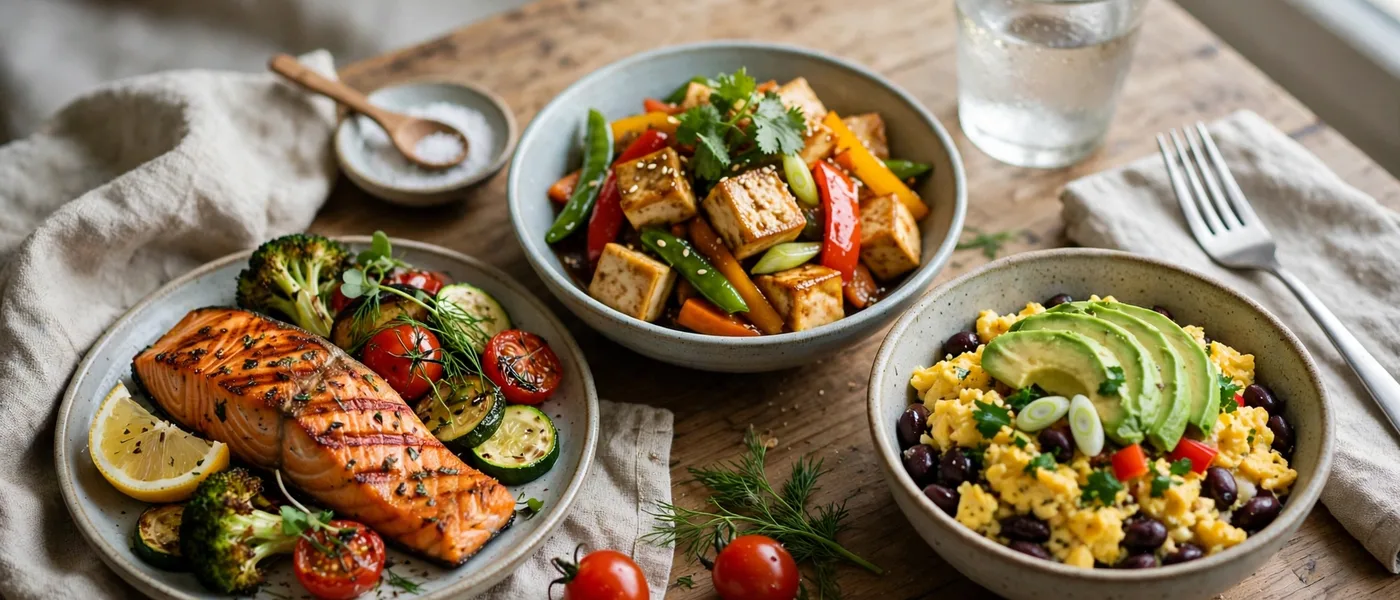
For lunch or dinner, picture a plate about two thirds the size you used to serve. One example is grilled chicken with a modest scoop of lentils, roasted vegetables and a small portion of grains. Another is salmon with green vegetables and a few bites of potato. A plant based example is a tofu and vegetable stir fry with a small serving of rice, cooked with modest oil so the meal does not sit heavily. A soup based example is a bean and vegetable soup with shredded chicken or tofu stirred through, which many people find easier than a dry plate on queasy days.
For a lighter meal when appetite is very low, shrink the framework rather than abandoning it: half an anchor portion, a small amount of vegetables, and a few bites of grains, eaten slowly. A yogurt based plate with fruit and a boiled egg, or cottage cheese with tomatoes and toast, can serve as a real meal on a difficult day. The point is the order and the anchor, not hitting a perfect composition at every sitting.
Eat protein first, and eat slowly
Order on the plate matters because fullness arrives early and unpredictably. Eat the protein anchor first, then the vegetables, then the starchy part if room remains. That sequence guarantees the most important part is eaten even when the meal ends early. Eating slowly, putting cutlery down between bites and pausing before taking seconds gives the fullness signal time to register. Serving food in the kitchen rather than from dishes on the table makes a smaller portion feel complete rather than restricted.
Fat and timing deserve a brief note. Very greasy versions of these meals, such as deep fried coatings and heavy cream sauces, commonly worsen nausea on these medicines, so grilled, baked and gently sauteed preparations usually work better. The GLP-1 foods to avoid guide explains the common triggers in detail. Many people also do better with their largest protein meal earlier in the day, when tolerance is often better than late in the evening.
When a meal is not going to happen
Some days, no framework will make a cooked meal appealing. Have a fallback that still respects the protein first idea: a shake chosen by sensible criteria, a yogurt drink, a small portion of cottage cheese, or leftovers in a small bowl rather than a full plate. The protein shakes on GLP-1 guide covers how to judge shakes, and the GLP-1 snacks guide covers small protein forward options between meals. A fallback used occasionally keeps the weekly pattern intact, which is what protects muscle and energy over time.
Build two or three framework plates you genuinely like, rotate the anchors, and keep portions honest and small. That is the whole method behind high protein meals for GLP-1 treatment, and it adapts to your appetite far better than any fixed menu.
Keeping track without obsessing
You do not need to weigh food or log every gram for this approach to work. A simpler check is to look back over a day and count the anchors: was there a deliberate protein portion at breakfast, at lunch and at dinner, and did you eat that part first? If the answer is yes on most days, your intake is probably landing near the range without any app. If one meal routinely has no anchor, fix that meal with a standby option you keep in the house, such as eggs, yogurt or a prepped portion from the fridge. The GLP-1 meal prep guide shows how to keep those standbys ready with one short weekly session, so the framework survives busy and low appetite days alike.
Frequently asked questions
What makes a meal high protein enough on a GLP-1?
A meal built around a deliberate protein anchor, such as eggs, chicken, fish, Greek yogurt, tofu, beans or lentils, sized to contribute a meaningful share of the daily target of 1.2 to 1.6 grams per kilogram of body weight. The anchor is chosen first and eaten first.
How big should portions be on GLP-1 medicines?
Smaller than before treatment, often around two thirds of a previous portion as a starting point, served on a smaller plate and eaten slowly. Stop at the first comfortable fullness, because fullness keeps building while the stomach empties slowly.
Are beans and lentils good protein anchors?
Yes. Beans and lentils provide protein and fiber together, which helps with the fiber reference of about 14 grams per 1,000 calories. Increase portions gradually, since a sudden large increase in fiber commonly causes gas and bloating.
What if I can only manage a very small meal?
Shrink the framework rather than skipping protein. Eat half an anchor portion with a little vegetable and a few bites of grains, or use a soft fallback such as yogurt, cottage cheese or a shake on the most difficult days.
Do high protein meals need to avoid carbohydrates?
No. The labels do not require a low carbohydrate diet. Smaller portions of grains and starchy foods fit the framework after protein and vegetables, and pairing carbohydrates with protein and fiber feels steadier for many people.