How Much Protein on a GLP-1? Targets in Plain Language
Protein is the number most people on GLP-1 medicines are told to watch, but the target is often given without a clear explanation. This page sets out the commonly cited range for how much protein on GLP-1 treatment to aim for, worked examples by body weight, and simple per meal splits. It is education only, not a personal prescription.
The target range, stated plainly
The range used on the live eating pages of this site, and cited commonly during weight loss, is 1.2 to 1.6 grams of protein per kilogram of body weight per day. It is a range, not a single magic number. The lower end is a sensible floor for most people eating less than before, and the upper end is where many clinicians aim when the priority is protecting muscle during faster weight loss. Your own clinician may set a different target, especially if you have kidney disease, diabetes with complications, or other conditions, and that personal advice comes first.
Why does protein get this attention? When total food intake falls, some of the weight lost can be muscle rather than fat. Protein, spread across the day and paired with regular movement, is the main nutritional tool for limiting that muscle loss. GLP-1 protein intake therefore matters more, not less, when portions shrink. The medicines reduce appetite and slow stomach emptying, so reaching the range takes planning rather than appetite.
Worked examples by body weight
The arithmetic is simple multiplication. Take your body weight in kilograms and multiply it by 1.2 for the low end and by 1.6 for the high end. If you know your weight in pounds, divide by 2.2 to get an approximate kilogram figure first. The examples below use the same method so you can check them yourself.
A person weighing 70 kg would aim for about 84 to 112 grams per day, because 70 times 1.2 is 84 and 70 times 1.6 is 112. A person weighing 85 kg would aim for about 102 to 136 grams per day. A person weighing 100 kg would aim for about 120 to 160 grams per day. A person weighing 120 kg would aim for about 144 to 192 grams per day, which is a large amount to reach on a reduced appetite, and is a good example of why a clinician or dietitian may adjust the target, sometimes using a reference weight rather than full body weight, for people at higher weights.
You do not need to hit the top of the range every day for the approach to be worthwhile. Landing consistently near or above the low end, most days, is a realistic and useful goal. Use the GLP-1 protein calculator to run your own weight through the same calculation and save the range somewhere visible, such as a note on the fridge.
Splitting the target across meals
A daily total is easier to reach when it is split into meal sized pieces. For a target of about 90 to 120 grams, a simple split is roughly 30 grams at each of three meals, with a small protein snack if a meal falls short. For a target of about 120 to 160 grams, the split might be roughly 35 to 40 grams at each meal plus a protein based snack or shake. Spreading protein across the day is also gentler on a stomach that empties slowly than trying to eat most of it in one large evening meal.
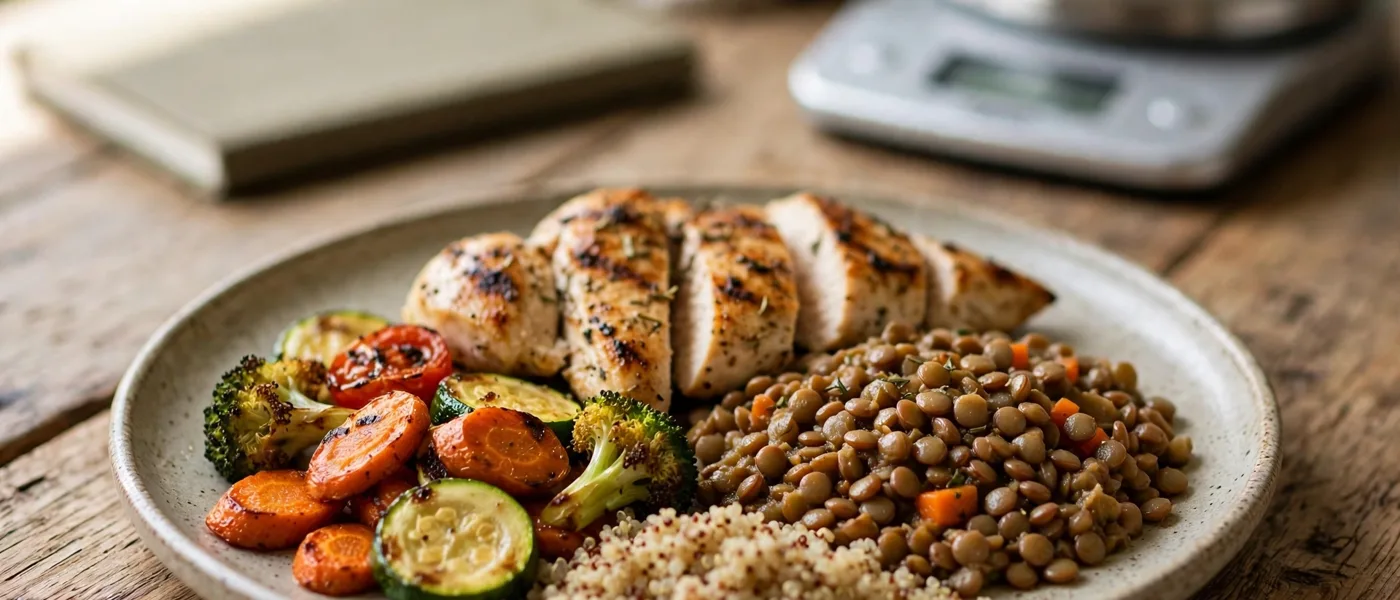
In food terms, a meal sized protein portion is the anchor of the plate: eggs at breakfast, Greek yogurt, chicken, fish, tofu, beans or lentils at lunch and dinner, eaten first before the rest of the meal. The high protein meals for GLP-1 guide shows how those anchors combine into smaller plates, and the what to eat on GLP-1 guide covers the wider pattern, including fiber at about 14 grams per 1,000 calories and fluids through the day.
GLP-1 protein intake on low appetite days
Some days, especially after a dose increase, even the low end of the range will feel out of reach. On those days, prioritize protein in liquid and soft forms that can be sipped or eaten slowly, such as yogurt, milk based drinks, a protein shake chosen by the criteria in the protein shakes on GLP-1 guide, soups with beans or lentils, and eggs in any form you tolerate. Smaller amounts, more often, usually work better than sitting down to a large plate and stopping after a few bites.
Do not chase the number at the cost of vomiting or severe discomfort. A day below target during illness or a difficult dose step is not a failure. What matters is the pattern over weeks. If low appetite persists for weeks, if you cannot keep fluids down, or if strength is clearly falling, raise it with your prescriber promptly. Rapid weight loss with very low intake is a medical conversation, not a willpower problem.
Common questions about the range
People often ask whether more protein is always better. Beyond the range, extra protein adds calories without a clear extra benefit for most people, and very high intakes can crowd out fiber and other nutrients. Others ask whether the target changes as weight falls. It does, gradually, because the calculation follows body weight, so recalculate every so often as your weight changes. Finally, protein alone does not protect muscle fully. Regular activity, including resistance exercise where your clinician agrees it is suitable, works alongside protein intake.
Keep the approach simple: know your range, split it across meals, eat protein first, and use shakes or snacks only to fill real gaps. That routine covers GLP-1 protein intake for most people without turning eating into a spreadsheet.
A brief note on tracking: a few days of rough notes, listing the protein anchor at each meal, usually tells you more than a precise app total. If each meal had a clear anchor, you are likely close to the range. If one meal a day has no anchor, that meal is the one to repair first, with a standby food you keep ready at home.
Frequently asked questions
How much protein on GLP-1 medicines should I aim for?
A commonly cited target during weight loss is 1.2 to 1.6 grams of protein per kilogram of body weight per day, spread across meals. For example, a person weighing 85 kg would aim for about 102 to 136 grams per day. Your own clinician may set a different target.
How do I work out my protein target from pounds?
Divide your weight in pounds by 2.2 to get an approximate weight in kilograms, then multiply by 1.2 for the low end of the range and by 1.6 for the high end. The GLP-1 protein calculator on this site does the same calculation for you.
Should protein be spread across the day or eaten at one meal?
Spread across the day. Smaller amounts at each meal are gentler when stomach emptying is slow, and a per meal split makes a large daily total reachable. Eating the protein part of each meal first helps when fullness arrives early.
What if I cannot reach the protein target?
Use soft and liquid protein sources on difficult days, eat smaller amounts more often, and focus on the pattern over weeks rather than a single day. If very low intake, vomiting or falling strength persists, contact your prescriber promptly.
Does the protein target change as I lose weight?
Yes, gradually, because the calculation is based on body weight. As your weight falls, the gram total for the same 1.2 to 1.6 grams per kilogram range falls with it, so recalculate your range from time to time.