GLP-1 Body Fat Calculator
Weight alone does not tell you what you are losing. This calculator uses the US Navy circumference method to estimate your body fat percentage, fat mass and lean mass from a few tape measurements, so you can watch your body composition, not just the scale, while you are on GLP-1 treatment.
How this estimate works
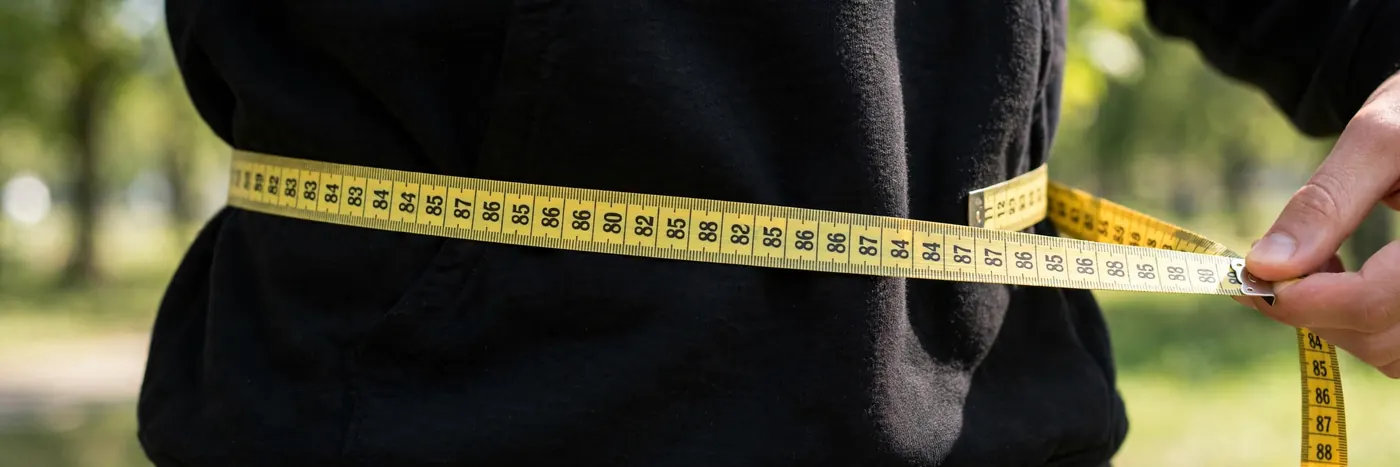
The US Navy method estimates body fat from circumferences instead of expensive scans. It was developed for the US Navy from research by Hodgdon and Beckett, and it uses the difference between your waist and neck measurements, adjusted for height. For women it also uses a hip measurement. The formulas use base 10 logarithms and were built around measurements in inches, so centimeter entries are converted to inches before the math runs.
From the estimated body fat percentage, the calculator splits your current weight into fat mass (the share that is fat) and lean mass (everything else: muscle, bone, water and organs). The category label uses the body fat ranges published by the American Council on Exercise, which run from essential fat through athletes, fitness and average, up to obese.
On GLP-1 treatment this split matters. Trial reporting suggests that a meaningful share of the weight people lose can be lean mass, which is why GLPKit pairs this tool with the GLP-1 Protein Calculator and the GLP-1 Muscle Loss Calculator. A body fat estimate that drifts down slowly while your weight falls is usually the pattern you want to see.
Frequently asked questions
How accurate is the Navy tape test?
It is an estimate, not a measurement. Comparisons with reference methods typically put it within a few percentage points for most people, but it can be less accurate for very lean or very muscular people, and it depends on measuring in the right places. It works best for tracking change over time, using the same tape and the same spots.
Why track body fat instead of just weight on GLP-1 treatment?
The scale shows total weight, not what that weight is made of. On GLP-1 treatment, some of the weight lost can be lean mass rather than fat. A body fat estimate repeated every month or two helps you see whether most of the change is coming from fat, and whether your protein intake and strength training are doing their job.
Where exactly do I measure?
Measure your neck just below the voice box, your waist at the level of your navel, and, for women, your hips at the widest point. Keep the tape snug and level, without squeezing the skin, and measure on bare skin or over one thin layer. Taking each measurement twice and averaging helps.