Ozempic vs Wegovy
Ozempic and Wegovy are the comparison that confuses people most, for a simple reason: they are the same medicine. Both pens contain semaglutide, made by the same manufacturer. What separates them is the label. Ozempic is approved for type 2 diabetes with a maximum dose of 2 mg a week, while Wegovy is approved for weight management with a maintenance dose of 2.4 mg. This page explains what that difference means in practice, and why it drives the price and coverage differences too.
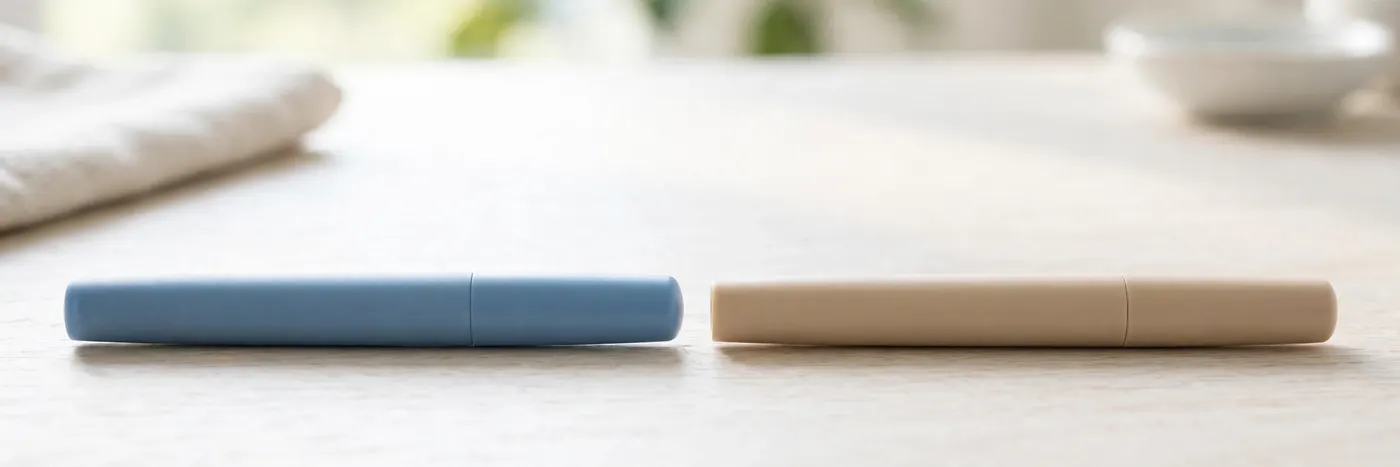
One ingredient, two labels
| Detail | Ozempic | Wegovy |
|---|---|---|
| Active ingredient | Semaglutide | Semaglutide, exactly the same ingredient |
| Approved for | Type 2 diabetes | Weight management |
| How often | One injection, once a week | One injection, once a week |
| Max weekly dose | 2 mg | 2.4 mg, the label maintenance dose |
| Trial result | Its approval trials were built around blood sugar control in type 2 diabetes | In STEP 1, people lost an average of 14.9 percent of body weight over 68 weeks |
| About list price per month | About $1,000 | About $1,350 |
Because the ingredient is identical, the differences on this page come from the labels: the condition each product is approved to treat, the maximum dose each schedule allows, and the price and coverage that follow from those two facts.
How they differ in practice
The dosing schedules are where the two products visibly part ways. Ozempic starts at 0.25 mg once weekly and rises only if the prescriber decides more effect is needed, up to a maximum of 2 mg. Wegovy follows a fixed climb through 0.25, 0.5, 1 and 1.7 mg to a maintenance dose of 2.4 mg from week 17 onward. The Ozempic dosage chart, the Wegovy dosage chart and the combined semaglutide dosage chart show both schedules week by week.
In the hand, the two pens are used the same way: one injection, once a week, on the same day each week. What differs is the reason for the prescription and the dose range the prescriber is working within.
Side effects compared
There is very little to compare here, because the ingredient is the same. Both labels list nausea, vomiting, diarrhea and constipation among the most common effects, along with the same serious warnings. If anything, tolerability questions are about dose rather than brand, since Wegovy is used at a higher maintenance dose. The Ozempic side effects page, the Wegovy side effects page and the shared semaglutide side effects page cover the profile in full.
Who each is usually prescribed for
Ozempic is the label for adults with type 2 diabetes, where the treatment goal is blood sugar control. Wegovy is the label for weight management in people who meet its criteria. Because insurance coverage usually follows the approved label, a person treated for weight is normally prescribed Wegovy, and a person treated for diabetes is normally prescribed Ozempic, even though the molecule in the pen is the same. Any use of a product outside its own label is called off label use, and whether it is appropriate is a prescriber decision.
Switching between them
People are sometimes moved from one label to the other, for example when treatment focus changes or coverage changes. Even though the ingredient is the same, switching is still a prescriber decision, never a self switch, because the dose schedules differ and the new product starts from its own schedule. Your prescriber will set the dose on the new pen and the timing of the change. Do not run the two pens in parallel, and do not assume a dose on one label equals the same step on the other.
Frequently asked questions
Is Ozempic the same as Wegovy?
The active ingredient is identical: both are semaglutide, made by Novo Nordisk. The products differ in their approved use, their dosing schedules and their maximum doses. Ozempic is approved for type 2 diabetes up to 2 mg a week; Wegovy is approved for weight management with a 2.4 mg maintenance dose.
Why is Wegovy more expensive than Ozempic?
The manufacturer sets a separate list price for each product. Wegovy lists at about $1,350 a month against about $1,000 for Ozempic, and its maintenance dose is higher. What you personally pay depends on coverage, which usually follows the label: weight management coverage for Wegovy, diabetes coverage for Ozempic.
Can I use Ozempic for weight loss instead of Wegovy?
Weight loss is Wegovy's approved use, not Ozempic's. Prescribing Ozempic for weight would be off label use, which only a prescriber can decide on, and insurers often will not cover a product outside its label. If weight is the goal, ask your prescriber about the weight management label directly.
Which has the higher dose, Ozempic or Wegovy?
Wegovy. Its maintenance dose is 2.4 mg once weekly, reached after a fixed climb over about four months. Ozempic tops out at 2 mg once weekly, and many people with diabetes stay below that maximum, because increases are optional and driven by blood sugar results.
Can I switch from Ozempic to Wegovy?
Yes, people do, but it is a prescriber decision, never a self switch. The schedules differ, so your prescriber will set where you start on the Wegovy schedule and when the change happens. Never use both pens at the same time, and never treat a dose on one label as the same step on the other.